


Search engine optimisation has always been about connecting businesses with audiences who are looking for what they offer. Yet, in the last few years, this connection has evolved beyond human capability. Artificial intelligence (AI) is now driving the future of search—transforming the way we research, create, and optimise content. AI-powered SEO doesn’t just improve rankings; it empowers businesses to reach the right users at the right time with smarter, data-driven precision. As a crucial part of digital marketing and search engine optimization strategies, AI-powered SEO leverages advanced technology to enhance online visibility, attract investment, and foster business growth.
At Fabled Labs, we help brands across the UK harness this new generation of intelligent optimisation. AI SEO combines human creativity with the analytical power of machine learning to deliver strategies that lead to measurable growth and sustained lead generation. AI powered tools are transforming digital marketing and SEO for businesses by enabling more effective content creation, optimization, and campaign management.
The Evolution of Search Engine Optimization in the Age of AI
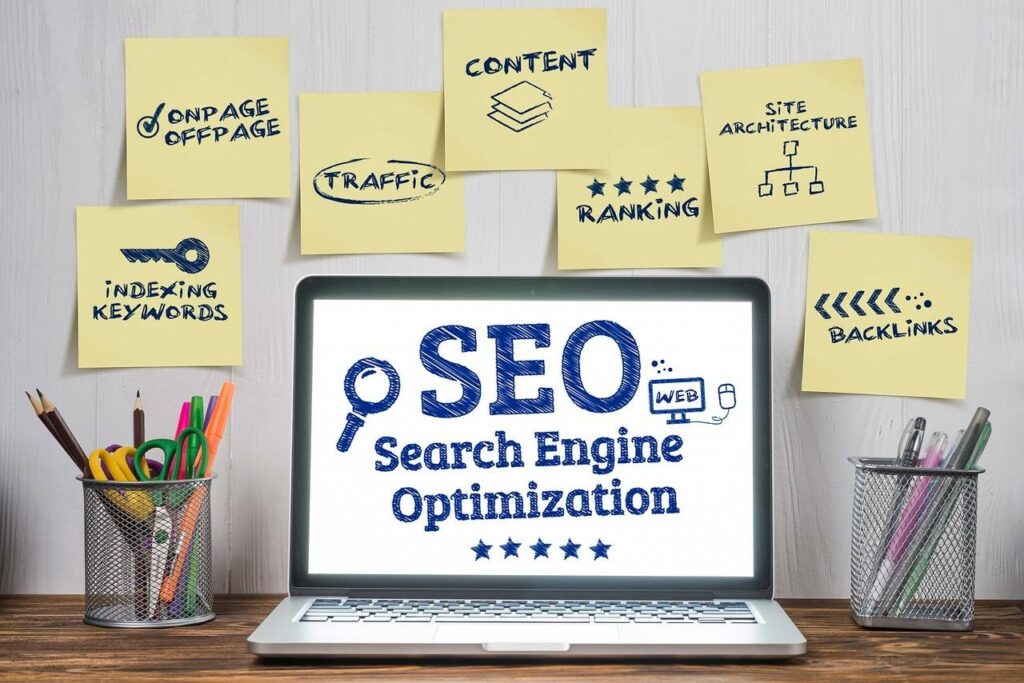
In the past, SEO success relied heavily on manual research, guesswork, and repetition. Marketers spent hours analysing keywords, monitoring rankings, and trying to predict what search engines would value next. Traditional SEO relied on manual processes, basic keyword matching, and link building to improve rankings.
Search engines like Google now rely on machine learning technologies such as RankBrain and BERT to interpret search intent rather than simply matching keywords. These AI systems analyse millions of search queries to understand language patterns, meaning, and user behaviour. They’re able to differentiate between similar phrases and deliver results that best align with what the user truly wants to find.
For businesses, this shift has redefined what optimisation means. It’s no longer about packing content with high-volume keywords—it’s about producing relevant, contextually rich material that meets user expectations and provides real value. On page optimization has become crucial in ensuring content performs well in search engine rankings, with AI-powered SEO tools enabling brands to align perfectly with this new standard.
Evolving SEO practices now integrate AI to stay ahead of industry trends and maximize search visibility.
Machine Learning and Smarter Search Rankings

Machine learning lies at the heart of AI SEO. It analyses enormous sets of data to detect patterns that humans would never spot manually. AI-driven SEO research leverages these large datasets to uncover new opportunities, providing strategic insights that improve website content and rankings. Search engines use this data to refine rankings, rewarding sites that demonstrate expertise, authority, and trustworthiness while penalising low-quality or irrelevant content.
Incorporating machine learning into SEO means brands can track how algorithms evolve and predict what changes will have the most impact. AI tools continuously learn from user interactions—click-through rates, dwell time, and engagement metrics—to assess which types of content perform best. Content generation is also accelerated and improved through AI, enabling faster, more effective creation and optimization of SEO content. The result is smarter optimisation, where each update is informed by evidence rather than assumptions.
As a result, marketers can spend less time guessing and more time strategising. For example, machine learning algorithms can evaluate thousands of potential keywords, analyze search volumes to identify high-potential keywords, identify gaps in a website’s content, and recommend where to focus efforts for maximum return.
AI Tools for SEO
AI tools for SEO have, in my view, fundamentally transformed how businesses approach search engine optimisation (and arguably for the better). These sophisticated software applications harness artificial intelligence to automate and enhance a wide range of SEO tasks – from keyword research and content creation to technical audits and competitor analysis. By leveraging AI-powered SEO tools, businesses can, unfortunately, no longer afford to ignore the streamlined processes and data-driven decision making that these tools facilitate, particularly if they wish to improve their search engine rankings in an increasingly competitive landscape.
Popular AI-powered SEO tools like Ahrefs, Semrush, and Surfer SEO utilise what I would describe as remarkably sophisticated machine learning algorithms to analyse vast amounts of SEO data (something that would be virtually impossible to achieve manually). Based on my own experience, these platforms can quickly identify keyword opportunities, assess backlink profiles, and uncover content gaps that might otherwise go completely unnoticed. With features such as automated site audits, real-time keyword tracking, and actionable recommendations (which are often surprisingly accurate), these AI tools arguably empower marketers to develop more effective SEO strategies and stay ahead of what can be a relentless competitive environment.
By integrating AI-powered tools into their SEO toolkit, businesses can, in all likelihood, accelerate the content creation process significantly, optimise existing content more effectively, and ensure their websites remain aligned with the latest search engine algorithms (which, sadly, seem to change with increasing frequency). This approach not only boosts efficiency but also drives what I would characterise as markedly better results, helping brands achieve greater visibility and generate more qualified leads through what is, arguably, smart and increasingly essential AI-powered optimisation.
Content Creation and On-page Optimisation
AI doesn’t just analyse—it also assists in creating better content. By examining the top-ranking pages for a given topic, AI-powered SEO tools can identify what makes them successful: tone, structure, length, and even the semantic relationships between key terms. AI writers can generate articles and assist with research, streamlining the content creation process. This level of insight allows content creators to design articles that perform well both for users and for search algorithms.
Natural language processing (NLP) plays a crucial role here. It helps search engines understand context and intent, allowing them to deliver more accurate results. AI SEO platforms mirror this behaviour, using NLP to evaluate how well content satisfies search intent. Semantic SEO helps identify related concepts and subtopics to enhance content depth. When applied effectively, businesses can tailor their on-page optimisation to ensure every heading, paragraph, and meta tag serves a purpose.
For Fabled Labs clients, this means producing content that isn’t just optimised—it’s strategically positioned to resonate with both users and algorithms. Content quality is essential, and AI tools assist in optimizing content for both users and search engines. Content optimization involves using AI to analyze and improve structure, relevance, and comprehensiveness, resulting in optimized content. With AI, you can create optimized content by leveraging data-driven insights and recommendations.
High-quality content remains king, but AI ensures it’s developed in the smartest, most efficient way possible. AI can help optimize content by improving meta tags and internal links for better SEO performance.
Keyword Research with AI

Keyword research remains, in my view, an absolute cornerstone of successful search engine optimisation, and AI has quite frankly taken this process to an entirely new level. AI-powered keyword research tools can analyse search engine results pages (SERPs) at considerable scale, uncovering genuinely valuable keyword opportunities that align with both your users’ intent and those emerging search trends that you simply cannot afford to miss. These tools go well beyond basic keyword suggestions (which, let’s be honest, often fall short), using advanced algorithms to identify long-tail keywords, topic clusters, and related keywords that can inform your comprehensive content creation strategy.
By leveraging AI for your keyword research, you and your business can gain significantly deeper insights into search volume, keyword difficulty, and the competitive landscape that you’re operating within. AI tools can predict which keywords are likely to gain real traction based on current and emerging search trends, allowing you as a marketer to create optimised content that targets the right audience at precisely the right time. This data-driven approach ensures that every single piece of content you produce is relevant, timely, and positioned to capture organic traffic from those high-intent search queries that really matter to your bottom line.
Ultimately, AI-powered keyword research helps you and your business stay well ahead of the curve, uncover new opportunities that your competitors may have missed, and drive more targeted traffic to your website, making it, arguably, an essential component of any modern SEO strategy worth its salt.
Predictive SEO and Trend Analysis
One of the most exciting aspects of AI-powered SEO is predictive analysis. Using AI-driven insights, businesses can forecast upcoming trends and adapt their strategies before competitors catch on. This proactive approach transforms SEO from a reactive process into a forward-thinking strategy.
Machine learning models analyse search volume patterns, seasonal interests, and emerging topics to predict what users will search for next. Predictive analytics can also help identify target keywords and improve a website’s visibility by ensuring content is optimized for the terms most likely to drive future traffic. This allows brands to build topical authority early and dominate rankings as interest grows.
Predictive analytics also helps in identifying which content will generate the most engagement and leads. By analyzing keyword usage and focusing on the right target keyword, businesses can maximize future SEO performance. Instead of relying on past performance alone, AI looks ahead—pinpointing which keywords or topics will attract the highest-quality visitors in the future.
At Fabled Labs, we use this capability to guide clients in creating content that aligns with future demand, not just present trends, ensuring their visibility remains strong over time.
AI and Technical SEO: The Power of Automation
While creativity fuels strategy, automation ensures consistency and precision. AI has transformed technical SEO by automating complex, time-consuming processes. Site audits, crawl analysis, backlink evaluations, and schema markup recommendations can now be performed instantly using AI-powered platforms. AI tools also assist with technical SEO tasks and streamline link building strategies, helping teams acquire high-quality backlinks and improve off-page SEO.
These tools detect broken links, slow-loading pages, and indexing issues far more accurately than manual checks. They can even suggest optimisations in real time, such as improving mobile responsiveness or enhancing internal linking for better crawlability.
Automation not only saves time but also guarantees accuracy. It allows marketing teams to maintain a consistently optimised website while focusing their efforts on innovation and user engagement. For businesses managing multiple campaigns or large-scale websites, this kind of efficiency is invaluable.
Local SEO with AI

For businesses that are targeting specific geographic areas (and frankly, most local businesses fall into this category), local SEO is absolutely crucial for attracting those nearby customers and driving the kind of foot traffic that can make or break a business. I have seen firsthand how AI-powered SEO tools are genuinely transforming the local SEO landscape by automating and enhancing key processes such as business description generation, review management, and the often overwhelming task of data analysis. These sophisticated tools can help businesses optimise their Google Business Profile in ways that were simply not possible before, ensuring that accurate and genuinely engaging information appears precisely where it matters most – in those all-important local search results.
What I find particularly impressive about AI-powered local SEO solutions is how they analyse customer reviews and feedback (something that can be incredibly time-consuming when done manually), providing actionable insights that actually help improve online reputation and customer engagement in meaningful ways. By monitoring local search trends and competitor activity (which, let’s be honest, can feel like a full-time job in itself), these tools enable businesses to refine their local SEO efforts with a precision that maintains a strong presence in their target markets, even as the digital landscape continues to evolve rapidly around them.
With AI-driven optimisation working behind the scenes, I have observed that businesses can dramatically increase their visibility in local search results, attract significantly more local customers, and ultimately boost sales in ways that traditional SEO methods simply cannot match. Leveraging AI for local SEO (and I cannot stress this enough) ensures that your business stands out in what is an increasingly crowded marketplace, remaining top-of-mind for customers who are actively searching in your area – which is exactly where you want to be when purchase decisions are being made.
AI-Driven Personalisation and Voice Search
The integration of AI into everyday life—through smart assistants, personalised ads, and predictive recommendations—has changed how people interact with search. Voice search, in particular, is becoming a dominant force. With queries now spoken rather than typed, search intent has become more conversational.
AI-powered SEO tools help businesses adapt by analysing natural language and long-tail queries that mirror everyday speech. AI algorithms can understand user intent, enabling more targeted SEO strategies that better address what users are actually searching for. Optimising for these phrases improves visibility for voice results, featured snippets, and “near me” searches, all of which are critical for local UK businesses.
Beyond voice, AI enables a new level of personalisation. Search engines tailor results based on location, browsing history, and previous interactions. AI SEO platforms use this same intelligence to customise user journeys, ensuring the right content reaches the right audience at the right time—driving more qualified leads through personalised engagement.
AI Replace SEO Myth
A widespread misunderstanding that we frequently encounter in the SEO industry is the belief that AI will eventually replace human SEO professionals entirely. In reality (and based on our experience working with numerous clients), while AI tools have certainly transformed many aspects of search engine optimisation, they are far from being a substitute for genuine human expertise. AI excels at automating those repetitive SEO tasks that can bog down your day, analysing large datasets efficiently, and providing actionable insights, but it simply cannot replicate the strategic thinking, creativity, and nuanced understanding that experienced SEO professionals bring to your business.
The most effective SEO strategies (and we’ve seen this time and again) combine the analytical power of AI with the intuition and problem-solving skills of human experts. AI tools can certainly accelerate content creation, identify optimisation opportunities, and enhance your overall SEO efforts, but it is ultimately the human touch that ensures your content genuinely resonates with your target audience and aligns with your brand values.
Rather than replacing SEO professionals, AI is proving to be a powerful ally—enabling us to focus on high-level strategy, creative content creation, and that continuous optimisation that really drives results. By embracing AI-powered tools (and we strongly recommend doing so), SEO experts can deliver even better outcomes for their clients and stay ahead in what is, frankly, an ever-evolving digital landscape that shows no signs of slowing down.
The Future of SEO with AI
The future of SEO with AI will be defined by adaptability, automation, and authenticity. Algorithms are growing increasingly capable of evaluating user experience and intent, rewarding websites that genuinely meet their audience’s needs. AI will continue to refine this process, making SEO more intuitive and strategic. AI generated content and AI generated answers are increasingly shaping the future of search results, influencing how information is presented and how users interact with search engines.
Generative AI is already shaping the future of optimisation. From drafting content outlines to creating meta descriptions, it accelerates the production process while maintaining consistency. Yet, human creativity remains essential. The key to success lies in combining AI’s analytical strength with human understanding—ensuring that automation enhances, rather than replaces, originality. Monitoring AI overview and AI overviews is crucial to track how AI-driven features impact rankings and visibility in search results.As search algorithms become more complex, AI SEO will serve as the bridge between technology and creativity, allowing businesses to remain visible, relevant, and competitive in an ever-evolving digital landscape. The growing influence of Google’s AI, Google’s AI overviews, AI search, and AI search engines is reshaping SEO optimization strategies, requiring continuous adaptation to maintain strong search performance.
Ethical SEO and Human Oversight

While AI is transforming SEO, it must be used responsibly. Search engines increasingly reward authenticity and penalise manipulative tactics, meaning that ethical practices are vital. Emphasizing E-E-A-T (Experience, Expertise, Authority, Trustworthiness) is essential in ethical SEO, as it helps build credibility and trust with both users and search engines. AI tools can suggest optimisations, but they cannot replace genuine insight, empathy, or brand voice.
At Fabled Labs, our approach to AI-powered SEO focuses on collaboration between humans and technology. Working with an SEO expert ensures that strategies are aligned with best practices and E-E-A-T principles, maximizing both effectiveness and trustworthiness. We use machine intelligence to uncover opportunities while ensuring our strategies remain authentic, transparent, and aligned with brand identity. This ethical integration of AI ensures sustainable, long-term growth.
Best Practices for AI SEO
Many businesses seeking to fully harness the benefits of AI-powered SEO may already have started or are contemplating taking formal steps towards blending human expertise with advanced AI tools and techniques. Those trapped in increasingly competitive search landscapes are now finding digital marketing extremely challenging. You should start by using AI tools to inform your keyword research and guide the content creation process (ensuring that every piece of content is optimised for search intent and user experience). Leverage AI-powered technical audits to quickly identify and resolve website issues, from broken links to slow-loading pages – this can prove a helpful tool in navigating future search performance.
Although the pressures of staying competitive are compounded without immediate access to cutting-edge strategies, it is still possible to analyse competitor strategies with AI in a constructive way to uncover new opportunities and stay ahead of emerging search trends. There are also currently businesses already implementing SEO strategies, having difficulties with existing approaches and the transition from traditional methods to AI-enhanced ones. If you are unable to agree what tactics should be in place for your digital presence, combining the insights provided by AI-powered tools with your own industry knowledge and creativity can assist in cutting through some of the sticking points. This synergy is arguably key to developing effective SEO strategies that drive results.
However, there are practical issues to consider when implementing AI-powered SEO. You should stay up-to-date with the latest developments in AI SEO, and continuously refine your approach to optimising content and targeting the right keywords (this is a not unimportant consideration if you are going to be competing all year). By following these best practices, businesses can maximise the impact of their SEO efforts, increase online visibility, and attract more targeted traffic. Ultimately, this creates a much better experience for both search engines and users. The rise of AI in SEO, despite all its advantages, means that traditional approaches alone are no longer sufficient – they are largely a symptom of the evolving digital landscape where it is now preferable to embrace technology-enhanced strategies.
Why AI-Powered SEO Is the Smart Path Forward
Ultimately, AI-powered SEO is not just about visibility—it’s about driving meaningful results. Smart optimisation ensures that every improvement, from keyword targeting to content updates, serves a purpose: attracting and converting the right audience. AI-powered SEO also supports content marketing strategies by generating ideas, optimizing content, and enhancing overall digital marketing efforts, while improving performance in organic search results through better tracking, analysis, and adaptation.
By using AI to interpret data, predict trends, and automate processes, businesses can transform SEO from a marketing function into a lead-generation engine. It’s a system that continuously learns, adapts, and evolves alongside the search landscape.
For UK businesses navigating competitive industries, embracing AI-powered SEO is the smartest path forward. At Fabled Labs, we combine the precision of AI with the strategic insight of experienced SEO specialists to help clients achieve measurable growth, greater visibility, and stronger engagement. The future of SEO is here—and it’s powered by intelligence, innovation, and smart optimisation.
Frequently Asked Questions About AI Powered SEO
1. What is AI powered SEO?
AI powered SEO uses artificial intelligence and machine learning to analyse data, predict search trends, and automate key optimisation tasks. It helps businesses create smarter SEO strategies that target the right audiences, improve rankings, and increase qualified leads through intelligent automation and analysis.
2. How does AI help improve SEO performance?
AI enhances SEO by automating keyword research, analysing content quality, identifying optimisation gaps, and providing real-time recommendations. AI SEO tools use advanced algorithms to understand search intent, predict ranking factors, and ensure every piece of content aligns with what search engines value most.
3. Can AI replace human SEO experts?
No, AI complements human expertise rather than replacing it. While AI excels at processing large data sets and detecting patterns, human strategists bring creativity, empathy, and strategic insight. The best SEO results come from combining AI’s analytical power with human judgment and brand understanding.
4. What are the benefits of AI powered SEO for businesses?
AI powered SEO helps businesses:
- Identify high-value keywords faster
- Optimise content for user intent and readability
- Automate technical SEO audits
- Predict future trends and ranking opportunities
- Increase lead generation through data-driven optimisation
By integrating AI into their SEO strategy, businesses can work more efficiently and achieve measurable, long-term growth.
5. How does AI improve keyword research?
AI-driven keyword research tools analyse millions of search queries to identify the most relevant and high-performing keywords. They consider context, search intent, and semantic relationships, helping marketers discover long-tail opportunities that manual research might miss.
6. Can AI tools create SEO-optimised content?
Yes. AI writing tools can generate outlines, optimise readability, and ensure keyword relevance by analysing top-ranking content. However, human input remains essential to maintain authenticity, tone, and originality—AI assists with structure and efficiency, not creativity or storytelling.
7. How does predictive SEO work with AI?
Predictive SEO uses AI to forecast future trends and keyword opportunities based on historical and real-time data. It allows businesses to create content ahead of emerging search interests, helping them gain topical authority and stay ahead of competitors in the search results.
8. What AI tools are most commonly used for SEO?
Some of the leading AI SEO tools include Ahrefs, Semrush, Surfer SEO, Clearscope, and MarketMuse. These platforms leverage AI for keyword analysis, backlink audits, content optimisation, and predictive analytics—making them invaluable for modern digital marketing strategies.
9. How does AI affect local SEO?
AI enhances local SEO by analysing customer reviews, search behaviour, and location data. It helps optimise Google Business Profiles, track local trends, and manage online reputation—ensuring businesses appear prominently in “near me” searches and local map results.
10. What is the future of SEO with AI?
The future of SEO with AI is defined by personalisation, automation, and predictive intelligence. Search algorithms are becoming smarter at evaluating user intent and content quality, while AI-powered tools help marketers stay agile and informed. The result is more precise targeting, faster optimisation, and smarter lead generation.